Skip to content


A wooden toy, a few gentle colours and a very tidy shelf. Is that Montessori? Not quite. And thankfully, you don't need a picture-perfect playroom to explore the ideas behind it.
“Montessori-inspired” pops up on puzzles, busy boards and all sorts of playthings. The interesting bit is what happens when a child gets their hands on them. What can they try? What can they discover? And does the activity suit them right now?
Let's unpack the term with guidance from the South African Montessori Association (SAMA) and Association Montessori Internationale (AMI), plus a few familiar examples from our Kiani and Envirokid ranges. No promises of tiny geniuses here. Just a closer look at purposeful, hands-on play.
It's an approach, not a decorating style
SAMA describes a prepared environment that meets children's needs and supports their choice of activity. Think accessible materials, an orderly space and opportunities to take part in practical tasks. The setting matters, and so does the adult's role.
A toy can't do all of that by itself, however lovely it looks on a shelf. So treat “Montessori-inspired” as the beginning of a conversation, rather than the final verdict. What inspired the design? What does the child actually do with it? Those answers are far more useful than a fashionable label.
What should you look for?
A purpose you can explain without a sales pitch
Matching shapes. Comparing sizes. Opening and closing a fastening. These tell you more than “packed with educational benefits”.
AMI explains that Montessori sensorial materials isolate one sensory concept for a child to explore through handling the material. That gives us a useful question: what is this particular activity inviting the child to notice or practise?
More features aren't automatically better. A toy can be great fun without following the design of a classic Montessori material, and that's perfectly fine. It just helps to know the difference.
Busy hands, not big promises

Turning, fitting, opening, closing, matching. Look for something the child can actually do, rather than just watch.
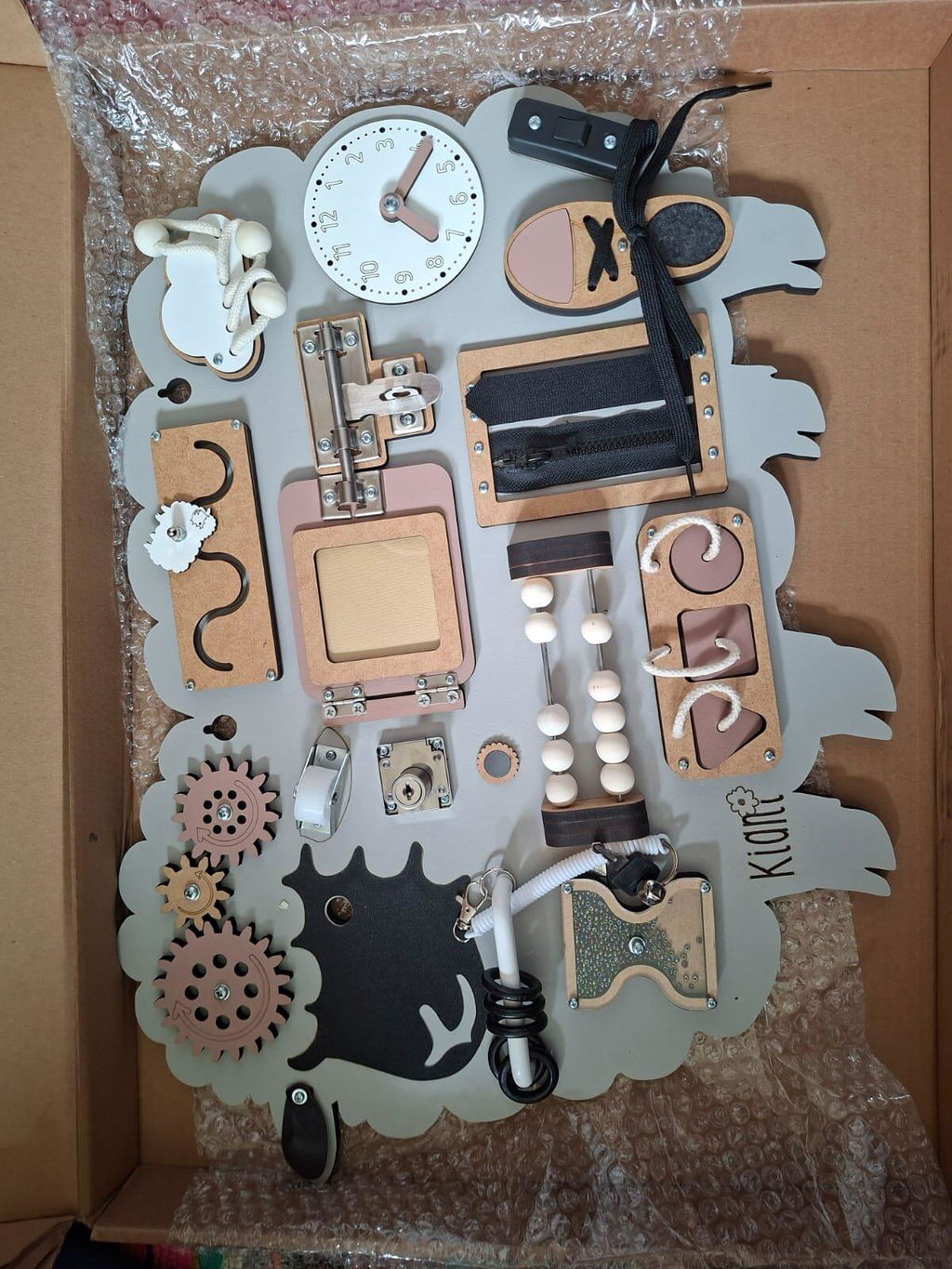
Kiani's South African-made activity boards are a lovely example to explore. The small Ellie elephant board brings together gears, a zip, shape pieces and fastenings. Plenty for curious hands to investigate, all on one rather charming elephant.
We describe these boards as Montessori-inspired, not as classic Montessori classroom materials. A board with several activities is also different from a material designed to isolate one concept.
The useful description is “offers practice using a fastening”, not “guarantees better fine-motor development”. One tells you what's there to try. The other promises a result that the toy alone can't establish.
A chance to notice and try again
SAMA's explanation of Montessori includes self-correcting materials. In plain language, the activity offers feedback the child can notice, without a grown-up having to announce every right or wrong answer.
Can the child see what happened? Can they have another go? That's a useful feature to look for, although not every worthwhile plaything needs to offer it. If a description claims an activity is self-correcting, it should explain how.
The right challenge for this child, today
SAMA's prepared-environment principles put children's needs at the centre. At home, that means watching the child in front of you, rather than shopping for an imaginary milestone checklist.
Can they handle the pieces? Are they interested? Can they try something without you doing almost all of it? Do they come back for another go?
These are helpful things to notice, not a test. No scorecard required, and definitely no comparing with the neighbour's toddler.
Real-life adventures, close to home

SAMA's published curriculum includes real-life activities connected with a child's home, community and culture. That's a welcome reminder that practical exploration doesn't have to arrive in fancy packaging.
At home, you might start with a suitable dressing task, tidying a shared space or helping with a simple household job. Choose something that fits the child's abilities and supervision needs. Everyday life has plenty to investigate.
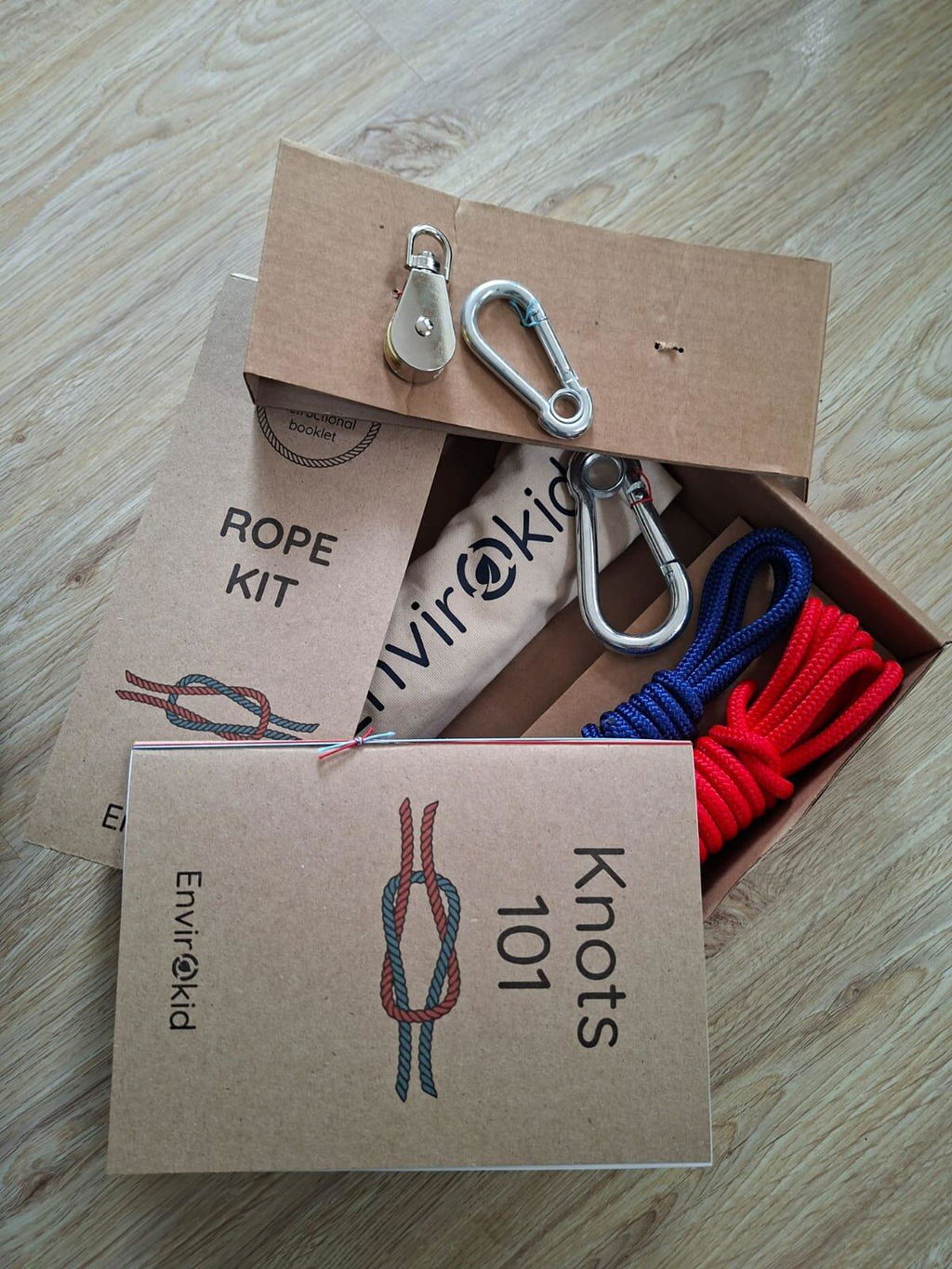
Locally made practical play products can offer another starting point. Envirokid's South African-made Rope Kit includes ropes and fittings for activities such as knot tying. It gives hands something real to work with, rather than a button that does all the work.
That makes it an example of hands-on practical exploration, not proof of Montessori approval. Not every outdoor adventure is a Montessori exercise, either.
And a rope kit is not a toddler activity board. Follow the manufacturer's age guidance and warnings, and supervise appropriately. Ropes and fittings are not unrestricted play materials for babies or toddlers.
Does it have to be wooden? Or beige?
A wooden toy isn't automatically a Montessori material. AMI's explanation of wooden materials discusses historical availability and durability, not a rule that wood alone makes something educational.
The same goes for gentle colours and beautifully arranged shelves. A colour palette can't tell you what a child will do with a toy. Neither can a “locally made” label, lovely as it is to discover South African makers.
Look past the styling and back at the activity. What is there to explore?
Inspired isn't the same as approved
This is a small distinction worth keeping. “Montessori-inspired” alone doesn't establish approval by a Montessori organisation.
AMI describes a specific arrangement for manufactured Montessori materials: selected manufacturers work to detailed AMI blueprints, and qualifying items carry the AMI logo in their catalogues. That's different from a general claim of inspiration.
If a product claims approval, look for the named organisation and information about that particular item. A toy can still be worthwhile without being a classic classroom material. It doesn't need a grander title to earn its place in the playroom.
What the label can't tell you
“Montessori-inspired” doesn't, on its own, show that a toy has been independently tested for developmental outcomes, reviewed by a qualified educator or approved by a Montessori organisation. Each of those claims needs its own support.
It doesn't replace the everyday toy checks, either. Read the manufacturer's age guidance, warnings, construction details and supervision instructions. An educational description isn't a shortcut to deciding what's suitable for a baby or toddler.
And those promises of accelerated development or guaranteed school readiness? Take a step back. An activity can offer a chance to practise without promising a particular outcome.
A little less playroom perfection
SAMA describes classroom materials kept within children's reach, complete and in good condition. You can borrow that idea at home without recreating a classroom.
Keep a manageable selection visible, put the pieces for an activity together and make space to use them comfortably. Start with what you have. You don't need to order a whole new set of furniture before anyone is allowed to play.
Then watch what gets chosen and revisited. The aim is to make choosing and using an activity easier, not to win a prize for the tidiest shelf.
The question that matters most
Instead of “Is it Montessori?”, try “What does this invite my child to do, and does that suit them now?”
Whether it's a Kiani activity board, an Envirokid practical play product or a simple task at home, look for a clear purpose, a manageable challenge and room to have another go. The label is a starting point. The interesting part is the exploring.
A note on our sources
We've drawn on the South African Montessori Association's Fundamental Principles, What To Look For, What is Montessori? and published 3–6 curriculum, alongside Association Montessori Internationale's explanations of sensorial materials, wooden materials and manufactured Montessori materials. The everyday examples are our interpretation, not an endorsement of our products by either organisation. This article has not been independently reviewed by an educator.